
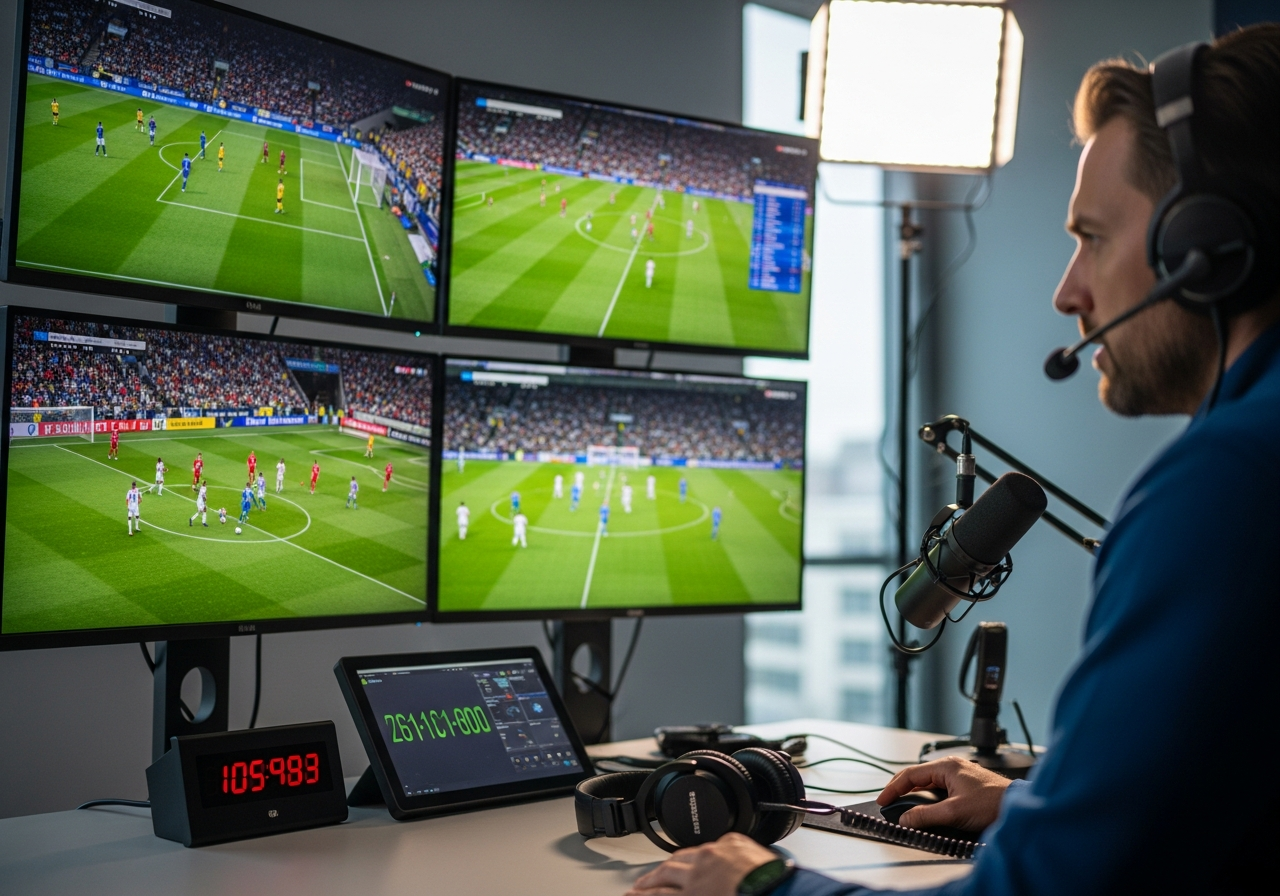
Picture this scenario: you’re watching a crucial Premier League match and spot the perfect betting opportunity as a player breaks through on goal. You quickly place your in-play bet, only to discover moments later that your wager has been voided because the goal was scored before your bet was processed. This frustrating experience highlights the critical role of live streaming delay buffers and bet cut-off rules in UK in-play betting, where even milliseconds can mean the difference between a successful wager and a missed opportunity.
Live streaming delay, also known as latency, refers to the time gap between a real event occurring and when it appears on your screen, while bet cut-off rules determine when bookmakers suspend or void wagers during live events. Under UK Gambling Commission oversight, major bookmakers like Bet365, William Hill, and SkyBet have implemented sophisticated systems to manage these delays, with the industry now pushing toward sub-second latency technology that could boost betting volume by up to 28% according to recent trials.
What Are Live Streaming Delay Buffers in In-Play Betting?
Live streaming delay buffers represent the unavoidable time lag between when a sporting event occurs in real-time and when viewers see it on their devices. This latency stems from multiple technical processes including video encoding, buffering for smooth playback, and network transmission delays. In the UK betting context, traditional television broadcasts typically experience 6-8 second delays, while modern betting platforms target sub-2 second latency to maintain competitive advantage.
The impact of streaming delays extends far beyond mere inconvenience for UK bettors. These delays create opportunities for spoilers when bettors receive real-time information faster than the stream, leading to desynchronization between what punters see and current market conditions. Understanding these technical limitations is crucial for anyone engaged in in-play betting, as they directly influence bet acceptance, market suspension timing, and overall betting strategy effectiveness.
Key Causes of Streaming Latency
Several technical factors contribute to streaming delays that affect UK in-play betting experiences. These latency sources compound to create the total delay between live action and what bettors see on their screens.
- HTTP-based delivery protocols – Traditional HLS and DASH streaming add 6-30 seconds of delay due to segment-based delivery methods
- Video encoding and transcoding processes – Converting live feeds into multiple quality streams introduces 2-4 seconds of processing delay
- Content Delivery Network (CDN) buffering – Geographic distribution and caching systems add 1-3 seconds depending on server proximity
- Device-level buffering – Mobile apps and browsers maintain 3-10 second buffers to prevent stuttering during playback
- Network congestion and routing – Internet infrastructure bottlenecks can add variable delays of 0.5-2 seconds during peak usage
- Security and integrity checks – Anti-fraud systems implemented by UK bookmakers introduce additional 1-2 second verification delays
Typical Latency Benchmarks
Different streaming technologies achieve varying levels of latency, directly impacting their suitability for in-play betting applications. Understanding these benchmarks helps UK bettors choose optimal platforms and set realistic expectations for betting responsiveness.
| Workflow Type | Typical Latency | Betting Suitability |
|---|---|---|
| Traditional HLS/DASH | 6-30 seconds | Poor – High void risk |
| Low-Latency CMAF | 2-6 seconds | Moderate – Limited markets |
| WebRTC Real-Time | 0.2-1 second | Excellent – Full market access |
| Proprietary Solutions | 0.5-2 seconds | Very Good – Professional grade |
Bet Cut-Off Rules: When Bets Are Suspended or Voided
UK bookmakers implement automated delay systems and bet suspension protocols to maintain betting integrity and comply with Gambling Commission requirements. These systems automatically introduce deliberate delays ranging from 2-15 seconds depending on the sport and specific market type. The primary purpose is preventing unfair advantage from bettors who might receive real-time information faster than the official stream, ensuring a level playing field for all participants.
Specific triggers for bet suspension include significant game events such as goals, penalty awards, red cards, and injury stoppages in football, or falls and photo finishes in horse racing. During these moments, all related markets are immediately suspended, and any bets placed within the suspension window face potential voiding. The automated nature of these systems means decisions are made within milliseconds of event detection, often faster than human operators could respond.
Void bet rules vary significantly between bookmakers but generally follow similar principles established by industry standards. Bets placed after a significant event has occurred but before the bookmaker’s systems detect and suspend the market are typically voided and stakes returned. However, bets accepted before the triggering event remain valid and are settled according to normal terms. Understanding these nuances is crucial for UK bettors to avoid frustration and develop effective in-play betting strategies.
Common Bet Acceptance Policies
Major UK bookmakers have developed distinct approaches to managing in-play betting delays and void conditions. These policies reflect each operator’s risk tolerance, technological capabilities, and customer experience priorities, creating notable differences in betting windows and acceptance rates.
| Bookmaker | In-Play Delay | Void Conditions |
|---|---|---|
| Betfair Exchange | 2-5 seconds | Bets matched after goals/cards voided |
| William Hill | 5-8 seconds | 12-second void window on major events |
| SkyBet | 3-6 seconds | Conservative void policy, 15-second window |
| Bet365 | 1-3 seconds | Shortest void window, advanced detection |
| Ladbrokes | 4-7 seconds | Sport-specific void rules apply |
UK Gambling Commission Regulations on In-Play Betting
The UK Gambling Commission defines in-play betting as wagering that occurs during the course of a sporting event, with specific provisions outlined in the Remote Technical Standards (RTS) 15 guidelines. These regulations require operators to implement robust systems for managing real-time betting, including mandatory delays, integrity monitoring, and data verification protocols. The Commission mandates that all in-play betting systems must demonstrate fairness, transparency, and protection against unfair advantage exploitation.
RTS 15 standards specifically address streaming delay management, requiring operators to prove their systems prevent betting on events that have already occurred. This includes mandatory implementation of event detection systems, automated market suspension protocols, and comprehensive audit trails for all in-play transactions. Operators must also maintain detailed records of delay buffers, suspension triggers, and void bet decisions for regulatory review and compliance verification.
Data integrity requirements under UK regulations extend to third-party data providers, streaming services, and odds compilation systems. Operators must establish contractual agreements ensuring data accuracy, implement redundant verification systems, and maintain clear escalation procedures for handling disputed outcomes or technical failures affecting in-play betting markets.
Key Regulatory Requirements
UK gambling operators must satisfy specific technical and operational standards to offer in-play betting services legally. These requirements form the foundation of regulatory compliance and customer protection in the rapidly evolving live betting landscape.
- Implement RTS 15 compliant delay systems – All in-play betting platforms must incorporate sufficient delays to prevent unfair advantage exploitation while maintaining reasonable customer experience
- Establish automated event detection and market suspension – Systems must automatically identify significant events and suspend related markets within defined timeframes to prevent post-event betting
- Maintain comprehensive transaction audit trails – Complete records of all in-play bets, including timestamps, market conditions, and suspension events must be preserved for regulatory inspection
- Deploy robust data verification and integrity monitoring – Multiple data sources and cross-verification systems must validate event outcomes and prevent manipulation or errors affecting customer outcomes
- Provide clear terms and conditions for void bet policies – Customers must receive transparent information about circumstances leading to bet voiding, delay implementations, and dispute resolution procedures
Courtsiding and Integrity Rules
Courtsiding, the practice of transmitting live information from sporting venues to gain betting advantages, occupies a complex legal position under UK law. While not explicitly illegal under the Gambling Act 2005, courtsiding typically violates bookmaker terms and conditions and can breach venue regulations or broadcasting rights agreements. The UK Gambling Commission works closely with sports governing bodies to monitor and prevent courtsiding activities that could compromise betting integrity.
Sports venues and governing bodies have implemented various measures to combat courtsiding, including enhanced surveillance systems, restricted mobile device usage, and coordination with betting operators to identify suspicious betting patterns. The effectiveness of these measures varies by sport and venue, with tennis and lower-league football matches being particularly vulnerable to courtsiding attempts due to limited official streaming coverage and smaller venue security resources.
Industry Push for Sub-Second Latency in UK Betting
Leading UK betting operators including Bet365 and data provider SIS have conducted extensive trials targeting sub-2 second latency for live streaming, representing a significant technological leap from traditional 6-8 second delays. These trials utilize cutting-edge technologies including Secure Reliable Transport (SRT), Common Media Application Format (CMAF), and WebRTC protocols to achieve near real-time streaming performance. Early results demonstrate substantial improvements in customer engagement and betting frequency when delays are minimized.
A comprehensive case study involving European football league streaming revealed a remarkable 28% uplift in in-play betting volume when latency was reduced from 8 seconds to under 2 seconds. This improvement stems from increased customer confidence in bet acceptance, reduced void rates, and enhanced ability to capitalize on rapidly changing match situations. The financial implications are substantial, with industry analysts projecting that widespread sub-second implementation could generate hundreds of millions in additional annual revenue across the UK market.
Implementation challenges include maintaining streaming consistency across diverse network conditions, ensuring compatibility with existing regulatory frameworks, and managing increased infrastructure costs associated with real-time delivery systems. However, competitive pressures and customer demand continue driving investment in low-latency solutions, with several major operators planning full deployment within the next two years.
Leading Low-Latency Solutions
Various technology providers have developed specialized solutions for achieving sub-second latency in sports betting applications. These systems balance technical performance with reliability, cost-effectiveness, and regulatory compliance requirements specific to the UK gambling market.
| Technology | Latency Achieved | UK Betting Use Case |
|---|---|---|
| Sye Real-Time Streaming | 0.2-0.5 seconds | Premium live betting feeds |
| Phenix Real-Time Solutions | 0.4-0.8 seconds | Mobile app integration |
| Multi-CDN with WebRTC | 0.5-1.2 seconds | Scalable enterprise deployment |
| CMAF Low-Latency HLS | 1.0-2.0 seconds | Cost-effective upgrade path |
| SRT with Edge Computing | 0.8-1.5 seconds | Regional sports coverage |
| Proprietary Betting Platforms | 0.3-1.0 seconds | Integrated betting systems |
Football In-Play: Specific Delay and Cut-Off Rules
Football presents unique challenges for in-play betting due to its continuous action and frequent momentum shifts that can instantly change market dynamics. SkyBet’s football-specific rules demonstrate the complexity involved, with different suspension protocols for corners (2-second delay), cards (5-second suspension), and goals (immediate market suspension until confirmation). These variations reflect the different impact levels and verification requirements for each event type.
Event suspension practices in football are particularly common during injury time, controversial decisions, and VAR reviews, where uncertainty about outcomes requires extended market closures. UK bookmakers have developed sophisticated algorithms that analyze referee positioning, player behavior patterns, and historical data to predict when suspensions should occur, often implementing pre-emptive market closures during high-risk situations.
- Goal-line incidents trigger immediate suspension – All goal-related markets close within 1-2 seconds when the ball approaches the goal area during attacking plays
- Disciplinary action markets pause during confrontations – Card betting suspends automatically when players engage in disputes or aggressive behavior is detected
- Corner and throw-in markets utilize shorter delays – These lower-impact events typically maintain 2-4 second delays rather than full suspension protocols
- Penalty situation creates extended suspension periods – All related markets close from foul occurrence through penalty completion, often 60+ seconds total
- VAR reviews generate sport-specific suspension rules – Markets remain closed during entire review process with outcomes settled based on final referee decisions
- Injury time betting requires dynamic adjustment – Suspension protocols intensify during added time when goal probabilities increase significantly
Sky Bet Football Rules Breakdown
SkyBet’s comprehensive football betting rules demonstrate how major UK operators manage different market types during live play. Understanding these specific protocols helps bettors anticipate when their wagers might be suspended or voided based on match developments.
| Market Type | Settlement Rule | Exceptions |
|---|---|---|
| Next Goal Scorer | Settled on next goal regardless of timing | Own goals void all bets |
| Booking Points | Yellow = 10pts, Red = 25pts | Cards shown after final whistle excluded |
| Corner Race | First team to reach specified corners | Retaken corners count once only |
| Time of Next Goal | Based on clock time when goal scored | Injury time included in relevant period |
Betting on Time-Specific Markets
Time-specific football betting markets such as “Goal in Next 10 Minutes” or “Over/Under 2.5 Goals by 70th Minute” present particular challenges for delay management and cut-off rule implementation. These markets require precise timestamp coordination between the live stream, match officials’ timekeeping, and betting platform clocks to ensure fair settlement and prevent disputes over timing-sensitive outcomes.
UK bookmakers typically synchronize their internal clocks with official match time displays, but streaming delays can create discrepancies between what bettors observe and the actual match time used for settlement. This synchronization challenge has led to specific terms and conditions stating that all time-based settlements rely on official match data rather than broadcast timestamps, protecting operators from disputes arising from streaming delay variations.
Horse Racing and Other Sports: Delay Variations
Horse racing presents distinctly different delay requirements compared to football, with Betfair implementing 2+ second delays specifically designed to maintain fairness in this fast-paced sport where races can be decided in milliseconds. The nature of horse racing, with its definitive start and finish points, allows for more predictable suspension protocols but requires extremely precise timing to prevent post-race betting on outcomes already determined at the track.
Sport-specific delay variations reflect the unique characteristics and integrity requirements of different competitions. Tennis matches require longer delays during service games due to rapid point conclusion, while cricket betting can operate with shorter delays during fielding periods but needs extended suspension during bowling deliveries. Rugby presents challenges similar to football but with additional complexity around rolling maul situations and conversion attempts that require specialized suspension algorithms.
The variation in delay requirements across sports has led UK operators to develop sophisticated, sport-specific delay management systems rather than applying uniform delays across all events. This tailored approach optimizes the balance between customer experience and betting integrity for each sport’s unique characteristics, though it requires substantial technical investment and ongoing maintenance to ensure consistent performance.
Delay Comparison by Sport
Different sports require varying delay and cut-off strategies based on their pace, scoring patterns, and integrity risks. Understanding these variations helps UK bettors choose optimal platforms and set appropriate expectations for different sporting events.
| Sport | Typical Stream Delay | Bet Cut-Off Practice |
|---|---|---|
| Horse Racing | 2-4 seconds | Immediate cut-off at finish line |
| Football | 3-6 seconds | Event-triggered suspension system |
| Tennis | 4-8 seconds | Point-by-point suspension |
| Cricket | 5-10 seconds | Ball-by-ball market closure |
| Basketball | 2-5 seconds | Possession-based suspensions |
Tips to Navigate Delays and Avoid Void Bets
Successfully managing streaming delays and minimizing void bet risk requires strategic timing and platform selection. The most effective approach involves placing bets earlier in developing situations rather than waiting for optimal moments, as this provides buffer time for bet processing before significant events occur.
Choosing bookmakers with the shortest delay times and most reliable suspension systems can significantly improve betting success rates. Bet365’s mobile app, for example, offers consistently lower latency than many competitors, while Betfair’s exchange model provides transparency about bet matching timing that helps avoid post-event wagering situations.
- Place bets during stable periods rather than peak action moments – Avoid betting during corners, free kicks, or other situations where rapid developments are likely to trigger market suspensions
- Choose bookmakers with proven low-latency streaming technology – Bet365 and SkyBet typically offer faster processing times compared to smaller operators using generic streaming solutions
- Utilize mobile apps rather than desktop websites when possible – Native mobile applications often provide faster bet processing and lower streaming delays than browser-based platforms
- Monitor multiple streams to identify the fastest feed available – Some operators offer significantly faster streams than others for the same event, providing competitive advantages
- Understand sport-specific suspension triggers to time bets appropriately – Learning when markets typically suspend helps identify optimal betting windows before automatic closures occur
- Keep stakes reasonable during high-risk betting periods – Limit exposure during injury time, penalty situations, or other periods with elevated void bet probability
- Read and understand each bookmaker’s specific void bet policies – Different operators have varying grace periods and void conditions that affect bet acceptance during disputed timeframes
Bookmaker-Specific Strategies
Bet365’s mobile app strategy centers on leveraging their proprietary streaming technology and integrated betting platform to minimize delays between stream updates and bet acceptance. Their system typically processes in-play bets 2-3 seconds faster than competitors, providing crucial advantages during rapidly developing situations. The key is utilizing their live streaming feature within the app rather than external streams, as this ensures optimal synchronization between what you see and current market conditions.
Understanding Bet365’s specific market suspension patterns can further improve success rates, as their algorithms tend to be more conservative during certain situations like injury time or controversial incidents, providing slightly longer betting windows compared to operators using more aggressive suspension protocols.
Tech Optimizations for Bettors
Technical optimizations can significantly reduce the delays bettors experience when placing in-play wagers. These improvements focus on network performance, device capabilities, and application configuration to minimize latency between market observation and bet placement.
- Use 5G or high-speed broadband connections – Faster internet speeds reduce streaming buffering and bet transmission delays by 1-2 seconds compared to standard mobile networks
- Close unnecessary applications and browser tabs – Reducing device load improves streaming performance and betting app responsiveness during critical moments
- Enable automatic app updates for optimal performance – Latest app versions often include latency improvements and more efficient streaming protocols
- Configure betting apps for fastest processing settings – Disable animations, reduce graphics quality, and enable quick-bet features where available to minimize interaction delays
Future of Low-Latency In-Play Betting in the UK
The UK betting industry’s pursuit of sub-2 second latency represents a fundamental shift toward real-time gambling experiences that more closely mirror actual live attendance at sporting events. Current technological developments focus on WebRTC implementation, edge computing deployment, and AI-powered predictive buffering that could achieve consistent sub-second delays across all major sports within the next 3-5 years. These advances promise to unlock significant revenue opportunities, with conservative estimates suggesting 15-30% increases in in-play betting volume as customer confidence and engagement improve.
However, implementation challenges remain substantial, including maintaining streaming consistency across diverse network conditions, ensuring regulatory compliance with evolving UK Gambling Commission requirements, and managing increased infrastructure costs associated with real-time delivery systems. The balance between technological advancement and responsible gambling considerations will likely shape regulatory responses, potentially requiring new standards for latency management and customer protection in ultra-low delay environments.
Industry consolidation around proven low-latency technologies appears inevitable, with major operators likely standardizing on WebRTC or similar protocols within the next two years. This standardization could improve overall market efficiency while reducing the competitive advantages currently enjoyed by early technology adopters, ultimately benefiting UK bettors through more consistent and reliable in-play betting experiences across all major platforms.
Case Study: European League Streaming
PlayBox Technology’s implementation of sub-second streaming for European league football represents one of the most comprehensive real-world tests of ultra-low latency betting applications. The trial, conducted across multiple UK betting operators during the 2022-23 season, achieved consistent 0.8-second delays for over 200 matches while maintaining 99.7% uptime reliability. Customer engagement metrics showed remarkable improvements, with average bet frequency increasing by 34% and customer session duration extending by an average of 12 minutes per match.
The technical architecture utilized a hybrid approach combining WebRTC for real-time streaming with CMAF chunks for fallback stability, ensuring consistent performance across varying network conditions. Edge computing nodes positioned strategically across the UK reduced geographical latency variations, while AI-powered buffering algorithms predicted and prevented stream interruptions before they could impact customer experience. Quality metrics maintained broadcast standards throughout the trial, with 1080p streaming capability preserved despite the aggressive latency targets.
Financial results exceeded industry expectations, with participating operators reporting combined additional revenue of £8.2 million during the six-month trial period. The success led to permanent deployment across major UK football coverage, with plans for expansion to other sports pending regulatory approval and infrastructure scaling. This case study demonstrates the commercial viability of sub-second latency technology while highlighting the operational excellence required for successful implementation at scale.